Spanish Market Data Shows Roulette Realized Margins Tracking Close to Theoretical Expectations
Written by Amir Werner · Oct 12, 2026

Spanish Market Data Shows Roulette Realized Margins Tracking Close to Theoretical Expectations
Analysis of figures released by Spain’s gambling regulator covers licensed roulette activity across 2021 to 2025 and places realized operator margins alongside the standard theoretical house edge of 2.703 percent on single-zero wheels, while licensed operators processed €42.2 billion in total wagers and retained €1.02 billion in gross gaming revenue for an overall realized margin of 2.42 percent.
Theoretical Edge and Recorded Performance
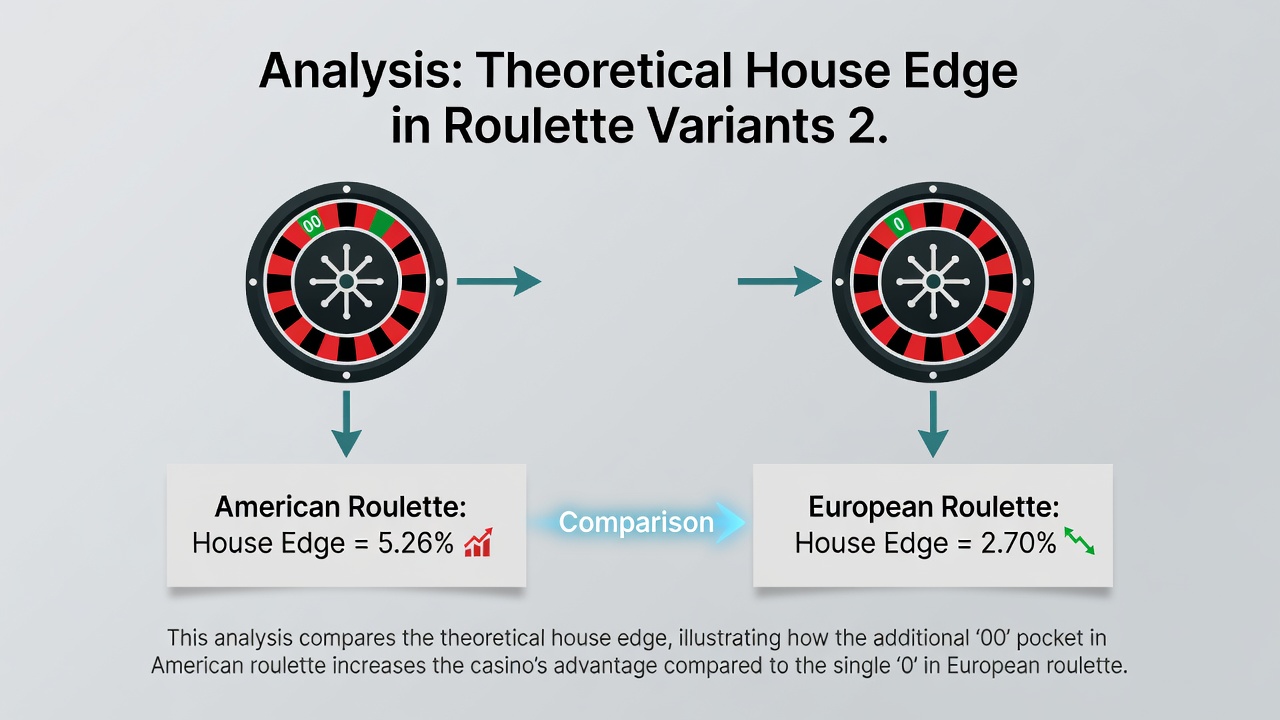
Single-zero roulette carries a fixed mathematical expectation where each spin returns 2.703 percent of total action to the house under standard European rules, and the Spanish figures sit just below that benchmark across multiple years of varying wager volumes. The DGOJ annual interactive data records both live and RNG roulette segments separately yet shows consistent proximity to theory regardless of whether play occurred on physical tables or digital interfaces, and the slight shortfall from 2.703 percent to 2.42 percent remains within ranges observers attribute to ordinary fluctuations in player behavior and reporting definitions.
Nevada Hold Percentages and Market Contrasts
Operators in Nevada report hold percentages that frequently exceed the Spanish realized margin, yet those figures incorporate different regulatory definitions of what counts as dropped coin and retained revenue, while the Spanish dataset isolates roulette wagers more narrowly. Data shows Nevada tables often post holds between 3.5 and 5 percent on combined American and European wheels, and analysts note that multi-zero layouts plus higher average bet sizes contribute to the wider spread. In contrast, the Spanish single-zero environment and stricter categorization of promotional play produce the narrower 2.42 percent outcome, and the two jurisdictions therefore illustrate how measurement conventions rather than game mechanics alone shape published statistics.
Bet Mix and Definitional Factors
Player preference for outside bets versus inside combinations influences short-term outcomes, and the Spanish regulator’s methodology records every chip wagered before any resolution occurs, which aligns closely with the theoretical calculation that assumes uniform random results. When bet distribution skews toward even-money wagers, realized margins compress slightly because those bets carry the same house edge yet generate steadier return cycles, and similar patterns appear whenever volume increases without corresponding changes in strategy distribution. Researchers examining the DGOJ interactive reports note that promotional credits and bonus wagering receive separate treatment in the Spanish system, which prevents artificial inflation of retained revenue and keeps the published margin nearer the pure mathematical expectation.
Betting Systems and Long-Term Results
Multiple documented approaches including Martingale, Labouchere, and Fibonacci sequences receive repeated testing in both live and RNG environments, yet none modify the underlying probability structure of the wheel itself. Each system rearranges the timing and size of individual bets while the per-spin expectation remains fixed at 2.703 percent, and the Spanish dataset spanning five years demonstrates that aggregate outcomes continue to converge on the theoretical line irrespective of which methods players employed. Observers note that the €42.2 billion total includes sessions from millions of distinct accounts, and the resulting 2.42 percent retention holds steady across both low-volume and high-volume periods, confirming that no combination of wager adjustments alters the house advantage embedded in the rules.
Regulatory Context Through 2025 and Into 2026
Spain’s Dirección General de Ordenación del Juego maintains ongoing publication of interactive dashboards that allow direct comparison of wagered amounts against gross gaming revenue for roulette categories, and the most recent updates through late 2025 continue to show realized margins clustered around 2.4 percent. By October 2026, analysts expect additional quarterly releases to extend the time series, yet the existing five-year window already supplies sufficient volume to illustrate stability between theoretical and observed figures. The regulator’s methodology applies uniform definitions across operators, which reduces variance caused by differing internal accounting practices and supports direct alignment checks against the 2.703 percent benchmark.
Conclusion
The Spanish data set provides a clear empirical reference point that places realized roulette margins within a narrow band beneath the theoretical house edge, and the consistency across billions of euros in action underscores that game mathematics governs long-run outcomes regardless of jurisdiction-specific reporting nuances or player-chosen betting patterns. Continued monitoring through the DGOJ interactive platform will allow future comparisons, yet the 2021–2025 record already demonstrates convergence between expectation and recorded performance.